How to See Past Outdated Homes and Imagine Your Perfect Space
by Bret Engle
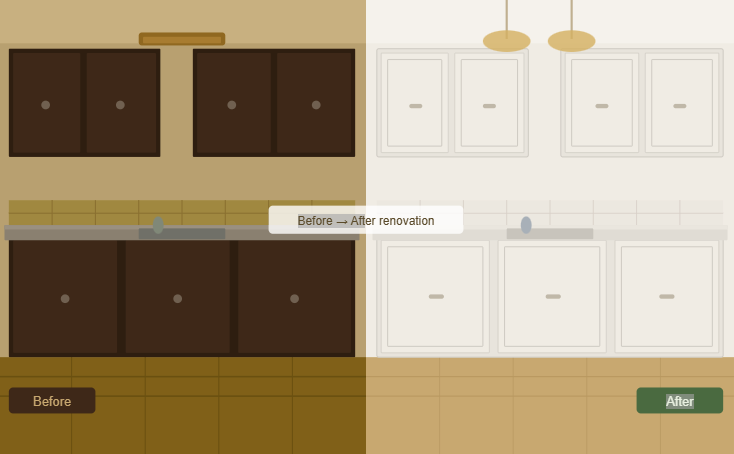
Southern California homeowners and property managers evaluating potential homes often run into the same wall: a place can have good bones while still feeling like a hard no. Outdated finishes, empty rooms, and awkward layouts pull attention to what looks wrong, making it tough to judge what’s actually fixed with paint and updates versus what will keep fighting the way people live. Add local worries like maintenance demands, wildfire risks, and insurance scrutiny, and hesitation can start to feel like the safest choice. The real win is learning to separate cosmetic noise from structural reality so the decision is based on the house, not the hangups.
Understanding Cosmetic Noise vs. Real Layout Limits
The tricky part of judging an older home is that your brain treats ugly finishes like real problems. Dark cabinets, dated tile, odd angles, and empty rooms create friction, so it’s hard to picture daily routines. That hesitation is a form of buyer resistance, where uncertainty gets louder than the facts.
This matters when you’re balancing repairs with safety upgrades like ember-resistant vents, defensible space, and roof or gutter work. When you can label what’s cosmetic, you avoid overpaying for “move-in ready” and keep a budget for the fixes that reduce risk. It also helps you focus on flow, storage, and exits instead of wallpaper.
Picture walking into a stale-smelling living room with bulky drapes and a chopped-up corner. You might miss that the room actually fits a sectional once the drapes go and lighting improves. With 60% of homeowners feeling uncertain about buying, separating noise from layout can calm the decision. A quick photo-based AI sketch helps test those ideas fast, before emotions take over.
Sketch a New Layout in 10 Minutes With an AI Mockup
Once you’ve separated “cosmetic noise” from true layout dealbreakers, a quick visual can help your brain stop arguing with itself. If you like a home but can’t quite picture how the layout or updates would come together, try using an AI drawing tool to visualize layout options to generate a rough concept in minutes. An AI-powered drawing tool by Adobe Firefly is a great place to begin.
Start with a clear photo of the room (or reference an image of a similar space), then use simple prompts to explore what you’re wondering about: alternate furniture arrangements, different finishes, or a new design style that matches how you actually live. You’re not aiming for a perfect remodel plan, just a fast, low-lift sketch that helps you “see” possibilities that are hard to imagine in an empty room or under dated finishes.
The real value comes from generating a few variations. When you compare options side by side, you can get a better feel for how the space might function (where seating could go, how open it feels) and how it might look after updates, without getting emotionally attached or mentally filling in unrealistic gaps.
Use a Walkthrough Checklist to Test Flow and Fixes
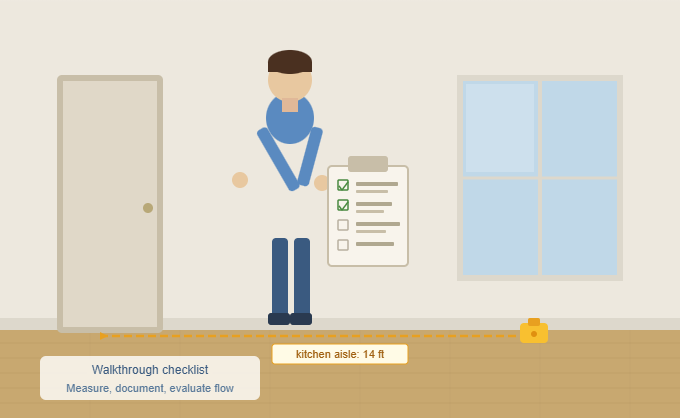
A rough AI mockup can get your imagination moving. A walkthrough checklist keeps it honest, so you can evaluate home flow and renovation feasibility with quick, repeatable checks instead of gut feelings.
- Run your “daily routes” and time the pinch points: Walk the house like you actually live there: car to kitchen, kitchen to laundry, bedrooms to bathroom, and backyard to trash bins. Note where two people can’t pass comfortably, where doors collide, and where you’re forced to zig-zag around furniture. If a route feels clunky now, it’ll feel worse with groceries, kids, or tenants, so flag those spots as priority layout modification ideas.
- Measure the “make-or-break zones” (with real numbers): Bring a small tape measure and capture quick dimensions: hallway width, kitchen aisle, dining wall length, shower opening, and washer/dryer alcove. Also measure ceiling height and window sizes in the rooms you’d most likely rework. These numbers let you sanity-check your AI sketch, like whether a peninsula actually leaves enough clearance or if a new closet would swallow the only usable wall.
- Look for load-bearing clues before you fall in love with an “open concept”: In the attic or crawlspace (if accessible), see which direction the joists run; walls perpendicular to joists are more likely to be load-bearing. In older homes, thick walls, beams, posts, and stacked walls from floor to floor are also clues. This isn’t a DIY structural call, just a practical assessment method to identify which “easy wall removals” might actually be engineered work.
- Do a systems scan so your layout plan matches reality: Track the “fixed” stuff: main electrical panel location, HVAC closet/furnace position, water heater, and where plumbing stacks likely run (often near bathrooms/laundry). If your AI mockup moves the kitchen across the house, you’re also moving drains, venting, and possibly gas, cost multipliers that affect feasibility. In Southern California, add defensible-space thinking: note where you’d want hardscaping, ember-resistant vents, or simpler irrigation zones while you’re already planning changes.
- Test what’s testable, room by room: Treat the visit like a mini quality-control pass: open/close windows, check door swing clearance, and look for floor slope or sticky doors that hint at movement. A final walkthrough is an inspection mindset helps you stay methodical even during an early showing. You’re not diagnosing everything, you’re spotting “investigate further” items that can change your remodel priorities.
- Rank fixes by impact: flow, function, then finishes: After the walkthrough, list your top five changes and label each as “flow” (layout), “function” (storage/systems/safety), or “finish” (cosmetic). Flow items might be widening a doorway or swapping door swings; function might be adding laundry storage or upgrading ventilation; finish is paint and lighting. That simple ranking keeps your renovation feasibility assessment grounded when you start comparing what’s truly worth changing versus what’s just dated.
Remodeling & Safety Upgrade Questions, Answered
Q: What upgrades pay off most if I might sell later?
A: Prioritize fixes buyers can feel: safer electrical, a solid roof, good drainage, and a clean, functional kitchen and bath. Big-ticket remodels do not always return dollar-for-dollar, and a modest kitchen remodel can recoup 70% in some estimates. Keep finish choices neutral and spend more on durability than trends.
Q: How do I know if a wall is worth moving, or if it is a money pit?
A: If moving it improves daily use, like opening a cramped kitchen aisle or fixing a dead-end entry, it can be worth pricing out. First, assume it needs engineering until a pro confirms otherwise, especially if it lines up with beams or supports above. Get a rough structural consult before you design cabinetry around the new plan.
Q: When should I stop dreaming and start budgeting for real?
A: As soon as you have basic measurements and two layout options you would actually live with. Create a “must-do safety” list, a “function” list, and a “nice-to-have” list, then request ballpark ranges from two contractors. That turns uncertainty into a decision you can manage.
Q: Can I do fire-safety improvements without a full remodel?
A: Yes. Start with ember-resistant venting, clearing debris zones, swapping worn weatherstripping, and upgrading exterior door seals. If you are touching siding, eaves, or windows anyway, bundle those with hardscaping or irrigation simplification to reduce future rework.
Q: How long do practical renovations usually take once I start?
A: A focused refresh can run weeks, while kitchens, baths, and multi-trade safety work often take months once permits, ordering, and inspections are included. Lock your scope early, choose materials before demolition, and plan a buffer for electrical and dry-rot surprises.
Choose Confidently: See Potential, Set Limits, and Update Wisely
Old finishes and quirky layouts can make a solid SoCal home feel like a bad fit, especially when the “fixes” sound expensive or uncertain. The way through is a realistic home evaluation paired with a successful home remodeling mindset: separate must-haves from workable compromises, then decide whether the bones support adapting homes to needs. That clarity builds buyer decision confidence, so the choice is no longer emotional, it’s practical: buy it, pass, or plan a smart update. If the structure supports your needs, the rest is just a plan and a budget. Choose one path today and write down the non-negotiables and the updates that can wait. That’s how empowering homebuyers turn a dated house into a healthier, more resilient place to live or manage.