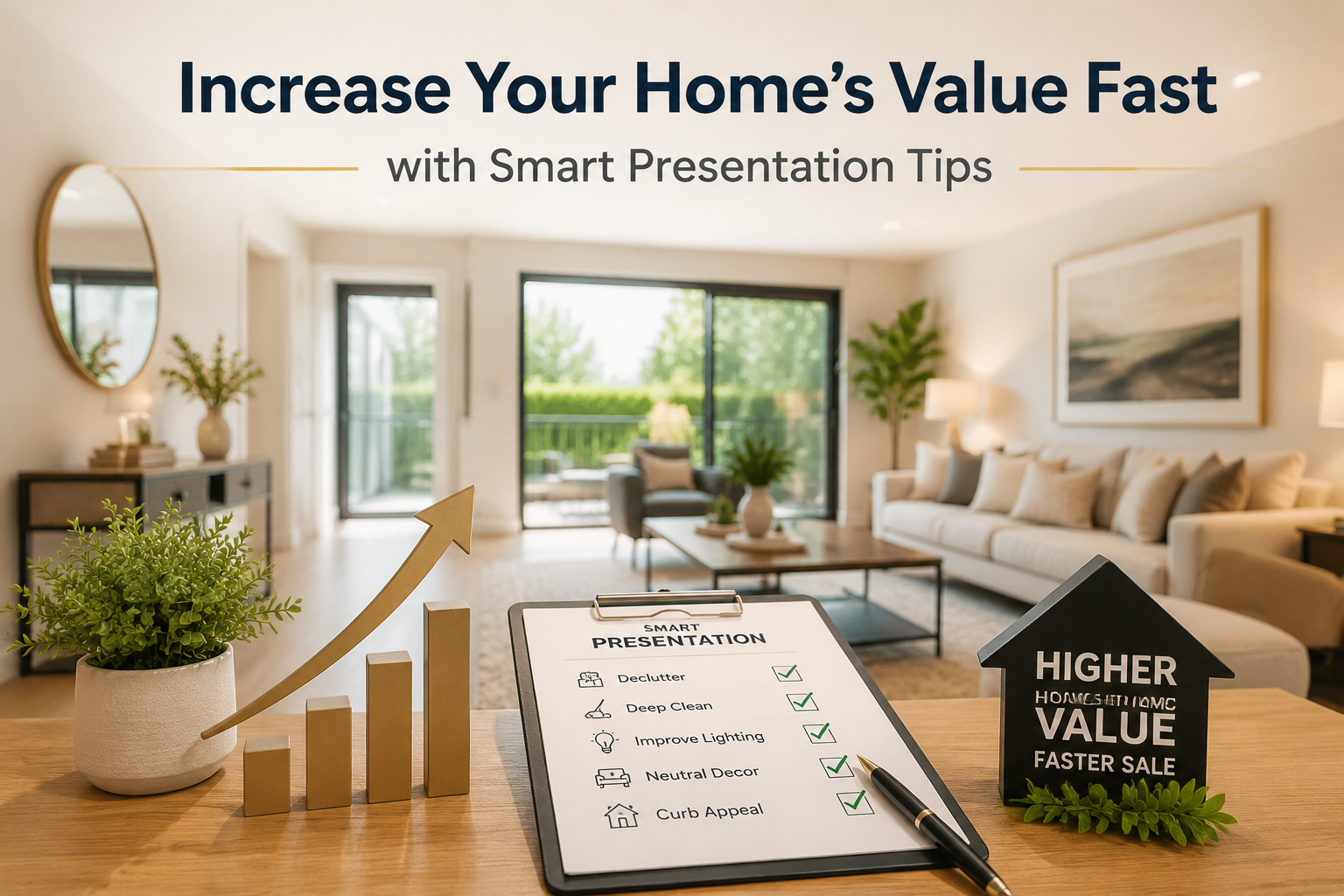
Increase Your Home’s Value Fast with Smart Presentation Tips Copy
Homeowners preparing to sell often feel stuck between two expensive options: pouring money into renovations or accepting a lower price. The challenge is that buyers react fast, and first impressions in real estate can raise or sink perceived value before anyone notices what was upgraded. In many cases, increasing home value happens quicker through a strong selling strategy and the right home presentation impact than through major construction. With the right focus, cost-effective home improvements can help a home read as well cared for, well priced, and worth competing for.
Understanding Perceived Home Value
Perceived home value is what buyers feel a home is worth the moment they walk in, before they calculate renovation costs. It is shaped by buyer decision factors like cleanliness, staging, lighting, and how easy the space seems to live in. When presentation signals “move-in ready,” buyers often assume the home has been well maintained.
This matters because many shoppers make fast comparisons and anchor their offer to that first mental number. In a market where the housing market remains divided between an all-time high of all-cash home buyers and an all-time low of first-time buyers, presentation helps you win both value-focused and convenience-focused buyers without a major remodel.
Think of it like selling a used car. The same model can sell for more when it is detailed, smells fresh, and is photographed well. A clean, staged home tells buyers they can unpack, not start a project. With these drivers clear, AI visuals can help you test the highest-impact presentation changes first.
Preview Staging Ideas With AI Mockups Before You Spend
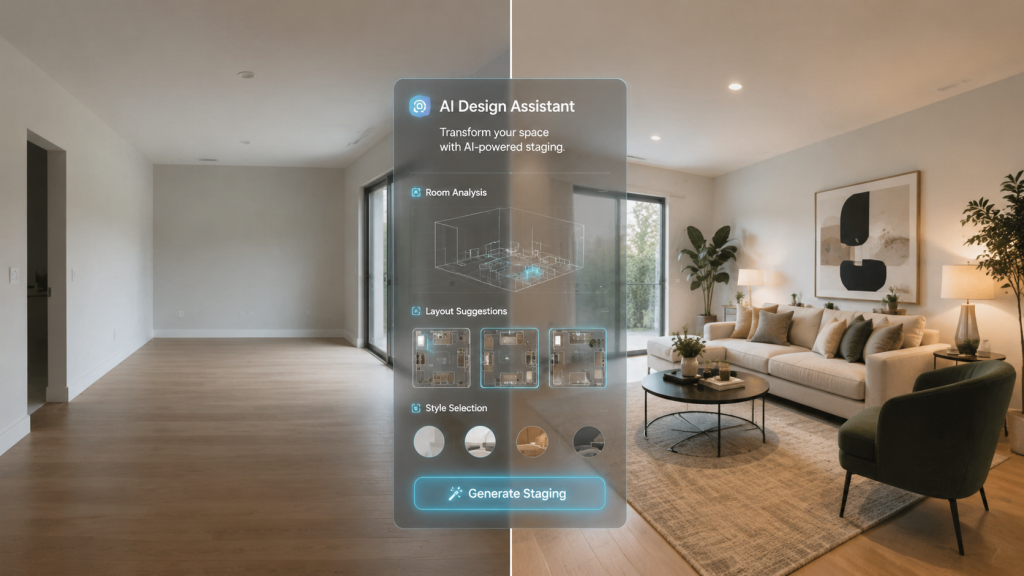
Once you understand that buyers respond to what they see and feel first, it helps to test presentation tweaks visually before you pay for them. AI image-generation tools can create quick mockups of low-cost staging changes, so you can compare options like decluttering, a lighter paint color, warmer lighting, or a different furniture arrangement without committing to a big renovation. Using a text-to-image tool, you generate AI images from written descriptions of the room you want to improve, then produce multiple variations to explore different layouts and décor concepts side by side. That makes it easier to spot which small changes create the strongest first impression for the least effort and expense.
To get more useful results, refine your prompts and outputs by adjusting details such as style, lighting, color, mood, and composition, and by using reference images to steer the look toward what you’re aiming for. Tools like the Adobe Firefly AI image maker are designed for exactly this kind of exploration, generate, compare, and fine-tune before you shop or repaint. With a few promising visuals picked out, the next step is turning them into a focused pre-listing upgrade checklist you can execute quickly.
Use This Pre-Listing Upgrade Checklist to Boost Appeal Fast
A few smart, low-cost upgrades can make your home feel cleaner, brighter, and easier to live in, without taking on a full renovation. Use the AI mockups you created to choose the updates that photograph best, then work through this checklist in order.
- Win the first 10 seconds with curb appeal: Homebuyers notice the exterior instantly, so treat your front door and walkway like the “cover” of your listing. Start with a 60-minute sweep: mow/edge, pull weeds, hose off the porch, and clear cobwebs. Then do two visual upgrades: a fresh doormat + matching house numbers, and one pop of color (a simple wreath or two planters). The idea is speed and contrast, clean lines read as “well cared for,” and that matters when a first impression happens in 7 to 10 seconds.
- Declutter like you’re moving (because you are): Aim to clear 30–40% of visible items from countertops, open shelves, and floors so rooms feel larger and easier to imagine living in. Box up extras, label by room, and store them out of sight (closet corners don’t count, buyers open closets). This isn’t just a personal preference; a 2023 study found half of all professionals recommended their clients declutter, which tells you how consistently it pays off.
- Do a “two-surface refresh” in every room: Pick two surfaces per room that create the most visual noise, usually walls and floors, or counters and cabinets. Patch nail holes, touch up baseboards, and repaint scuffed areas in one consistent, neutral tone (use your mockups to confirm undertones). For floors, deep-clean grout, spot-treat stains, and add one simple rug only if it helps define a space (like a small seating area in a big living room).
- Upgrade lighting in three quick passes: First, replace burnt-out bulbs and match color temperature within each room so photos don’t look uneven. Second, increase brightness where it’s dim: higher-lumen bulbs in lamps, plus one additional floor or table lamp in dark corners. Third, make fixtures look intentional: clean glass shades, straighten fans, and swap dated switch plates, small, affordable changes that read as “updated.”
- Optimize space with buyer-friendly layouts: Use your AI layout experiments to pick the arrangement that creates the clearest walking paths and the biggest “open area” in photos. Keep one focal point per room (fireplace, window, TV wall), then float or shift furniture to create a simple loop you can walk without bumping into anything. If a room is awkward (like a wide hallway or loft), assign it a job, reading nook, small desk, or workout corner, so buyers don’t see wasted square footage.
- Run a pre-listing maintenance sweep (the trust builders): Fix anything that signals neglect: dripping faucets, sticky doors, squeaky hinges, loose toilet seats, missing caulk, and cracked outlet covers. Check that every window opens, every smoke/CO alarm works, and every vent and filter is clean. These aren’t glamorous upgrades, but they reduce buyers “what else is wrong?” anxiety, and help you decide where presentation ends and true repair begins.
Home-Selling Questions People Ask Most
Q: What improvements actually add value fast without major renovation?
A: Prioritize what buyers notice first: clean, bright, and well maintained surfaces. Focus on paint touch-ups, lighting, and a tidy exterior because exterior improvements can deliver strong visual payoff quickly. Choose updates that photograph clearly and make rooms feel easy to use.
Q: How much does staging really change what buyers offer?
A: Staging reduces distractions so buyers can “get” the space faster and feel more confident about condition. A useful benchmark is that staging their sellers’ homes has been linked by agents to higher offers in some cases. If full staging is not realistic, stage only the living room, primary bedroom, and dining area.
Q: When should I do these presentation updates if I want to list soon?
A: Start with fixes that prevent negative reactions in a showing, like odors, burned-out bulbs, or sticking doors. Then tackle the photo drivers: decluttering, neutral touch-ups, and simple furniture edits. If you have one weekend, do exteriors Saturday morning and interiors Saturday afternoon.
Q: Should I spend money or just clean and declutter?
A: Begin with free wins, then add a small budget only where it changes the picture, like fresh bulbs, a new shower curtain, or modern switch plates. A smart rule is to spend only when it makes a room look newer, larger, or brighter in photos. Skip anything you cannot finish cleanly.
Q: Can I price a little high to “leave room” for negotiation?
A: Pricing too high often reduces showings because bypassing overpriced listings entirely is what many informed buyers and agents do. Instead, price to attract attention, then let your presentation support the number. Ask your agent for a tight range based on recent, similar sales.
Lock In Home-Selling Readiness with a Simple 48-Hour Plan
When it’s time to sell, the hardest part is knowing what actually boosts value versus what just burns time and money. A smart presentation mindset, focus on what buyers notice first, remove distractions, and keep every choice aligned with maximizing property appeal, turns key home presentation takeaways into confident pre-sale preparations. The result is clearer home selling readiness, stronger photos and showings, and more value-boosting actions that feel doable instead of overwhelming. Make it easy for buyers to picture living there, and they’ll pay closer attention to your home’s value.