5 DIY Home Projects That Can Save Your House In A Fire.
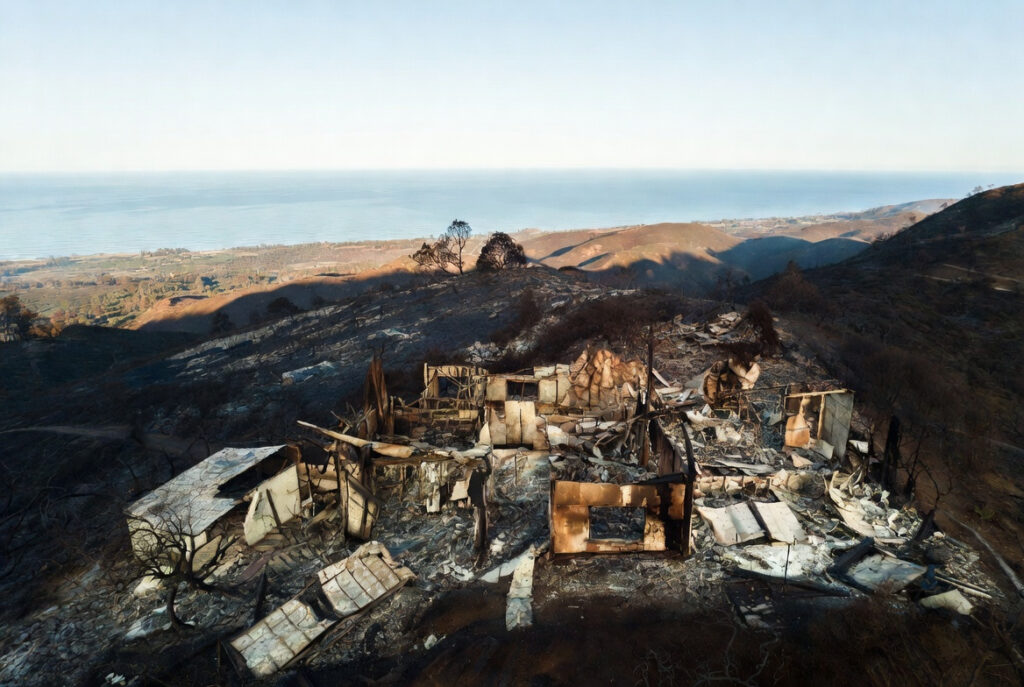
Wild fires are a very serious concern for home owners in our service area. At Edward’s Enterprises we encourage Southern California homeowners to tackle several straightforward weekend projects that dramatically improve wildfire safety around the house.
1. Create a 0–5 ft “ember‑proof” buffer
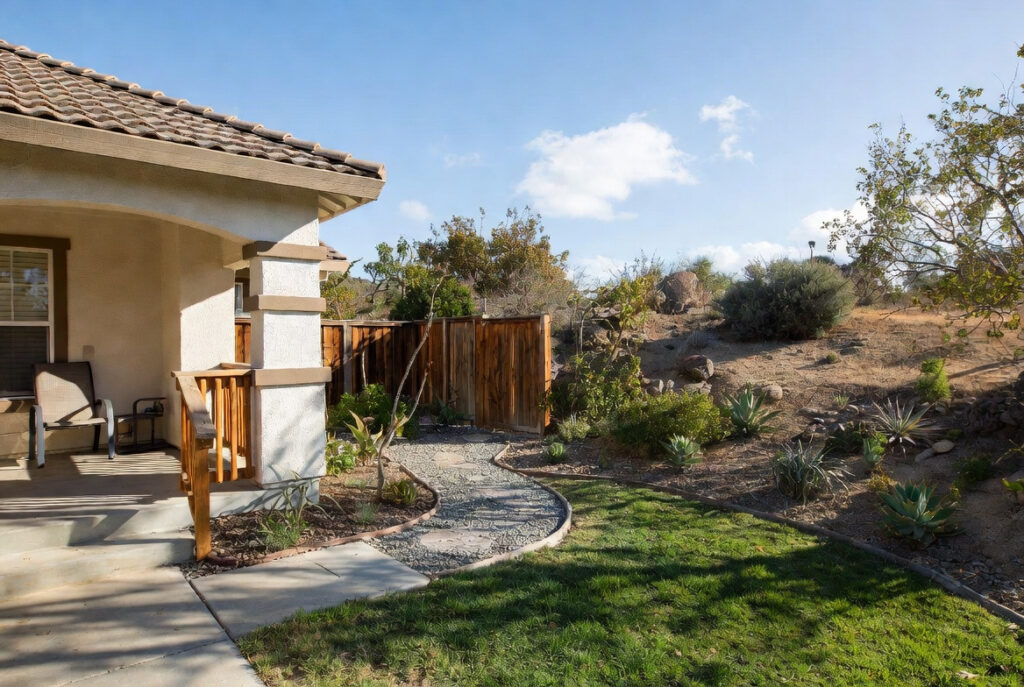
The first five feet around your house is the most critical zone for preventing ignition from embers.
Goal: Remove anything that can catch fire within 0–5 ft of walls, decks, and fences.
Materials
- Heavy‑duty yard waste bags
- Flat shovel, metal rake, broom
- Noncombustible ground cover: gravel, decomposed granite, pavers, or concrete stepping stones
- Optional: landscape fabric and metal edging
Steps
- Walk the perimeter and mark a 5 ft strip from all exterior walls, decks, and attached fences. Remove wood mulch, dead plants, dry leaves, stored lumber, firewood, and plastic planters from this strip. Read here for more info.
- Sweep or blow debris off patios, under decks, and from corners where leaves collect, then bag and dispose of it.
- Lay landscape fabric (optional) and cover the entire 0–5 ft zone with gravel, decomposed granite, or pavers to create a noncombustible “moat” around the house.
- Relocate shrubs, wood planters, and trash bins to at least 5–10 ft from the house or replace near‑home plantings with low, irrigated, non‑woody plants in noncombustible containers.
Time: 3–6 hours for a typical suburban lot; can be split over two evenings.
Helpful products & services
- Bulk rock or DG delivery from local landscape yards to quickly cover the 0–5 ft zone.
- Hardscape installers or handymen for laying pavers if you prefer not to DIY.
- Local fire department or CAL FIRE defensible‑space inspections to get feedback on your new buffer.
2. Clean and upgrade gutters to ember‑resistant guards
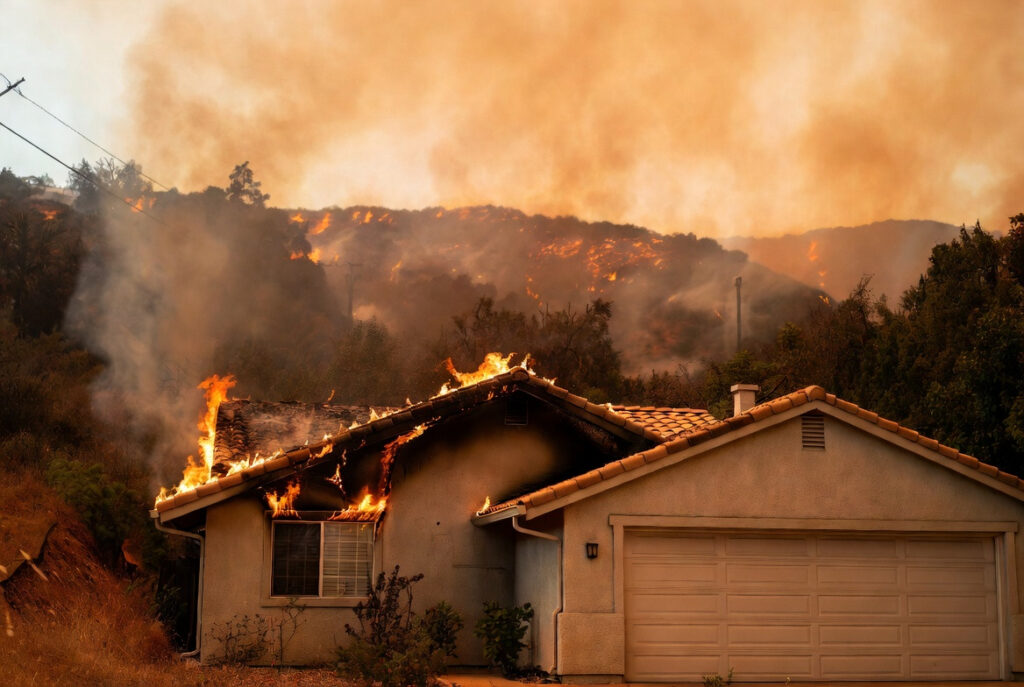
Embers commonly ignite dry leaves and needles in gutters, leading to roof fires.
Goal: Keep gutters and roof edges free of debris and reduce future buildup.
Materials
- Extension ladder and ladder stabilizer
- Work gloves, safety glasses, dust mask
- Small scoop or trowel, bucket, garden hose with spray nozzle
- Stainless‑steel micro‑mesh gutter guards designed for wildfire and ember protection.
- Tin snips and screws per manufacturer instructions
Steps
- On a dry, calm day, set up your ladder safely on flat ground and wear protective gear.
- Scoop out all leaves, twigs, and debris from gutters; flush with a hose until water runs freely from downspouts.
- Inspect fascia and roof edges for damaged sections and repair as needed so guards have a solid base.
- Install stainless‑steel micro‑mesh gutter guards along roof edges, trimming and fastening them per instructions to fully cover gutter openings and block embers.
- Check valleys and roof‑to‑wall intersections for debris traps and clear them; schedule a quick visual check at the start of every fire season.
Time: 2–4 hours for a one‑story home; add time for two‑story roofs or complex layouts.
Helpful products & services
- Stainless‑steel micro‑mesh systems marketed specifically for ember resistance, such as EPS gutter guards or FireStorm‑type ember‑guard products.
- Local, licensed gutter cleaning and guard‑installation companies if your roof is steep or multi‑story.
3. Seal exterior and garage door gaps against embers
Even tiny gaps around doors and garage doors can admit embers into your home or garage.
Goal: Close gaps larger than about 1/8 inch around exterior and garage doors to limit ember intrusion.
Materials
- Flashlight and notepad for inspection
- Exterior‑grade silicone or polyurethane caulk
- Door weatherstripping kits for sides and top of exterior and garage doors
- New bottom sweep or threshold for garage door
- Utility knife, caulk gun, tape measure, screwdriver
Steps
- At night or in a darkened garage, have someone shine a light from inside while you look outside; mark any spots where light shows through around doors and between frames and slabs.
- Remove old, brittle weatherstripping and sweeps. Clean surfaces with a brush so new materials adhere well.
- Install new perimeter weatherstripping so it compresses snugly against closed doors; adjust hinges or tracks if necessary to achieve an even seal.
- Replace or add a garage‑door bottom seal and, if needed, a threshold to close gaps to no more than 1/8 inch.
- Caulk cracks where door frames meet siding or concrete using exterior‑grade caulk, smoothing for a continuous, ember‑tight seal.
Time: 1–3 hours for typical front, back, and garage doors.
Helpful products & services
- Fire‑focused home‑hardening programs and guides (e.g., county home‑hardening initiatives) that show examples of acceptable gap sizes and retrofit options.
- Weatherstripping and garage‑door seal kits from local hardware stores or installers to handle tricky, out‑of‑square doors.
4. Clear and maintain defensible space in the yard
Defensible space gives firefighters room to work and reduces flame intensity before it reaches your home.
Goal: Create and maintain lean, clean vegetation zones out to at least 100 ft from structures where possible.
Materials
- Hedge trimmer or pruning saw
- String trimmer (“weed‑whacker”)
- Rake, loppers, chainsaw (if experienced)
- Green‑waste cans or trailer for hauling
- Irrigation timer (optional)
Steps
- In the 0–30 ft “lean, clean, and green” zone, remove dead plants, dry grasses, and piles of leaves; thin dense shrubs and keep plants low and well‑watered.
- Prune tree branches so crowns are at least 10 ft apart on flat ground and 10 ft away from chimneys and other trees, increasing spacing on steeper slopes.
- In the 30–100 ft extended zone (or to your property line), reduce “ladder fuels” by clearing out shrubs and small trees under taller trees so fire can’t climb into the canopy.
- Mow or string‑trim grasses down to about 4 inches in fire season and maintain separation between shrubs, trees, wood piles, and structures.
- Put a reminder on your calendar to recheck these zones at least once each spring and late summer before peak Santa Ana winds.
Time: 4–8 hours initially, then 1–2 hours every couple of months for maintenance.
Helpful products & services
- CAL FIRE defensible‑space guidance and checklists tailored for California properties.
- Local arborists or fuel‑reduction services for tree pruning and heavier brush removal on slopes.
- Install or maintain smart irrigation controllers to keep key landscape plants green without wasting water.
5. Upgrade vents to ember‑resistant models
Vents under eaves, in crawlspaces, and in attics are common ember entry points during wildfires.
Goal: Replace or cover older, large‑mesh vents with ember‑ and flame‑resistant designs while maintaining needed ventilation.
Materials
- Tape measure and notepad to record vent sizes
- Screwdriver or drill, metal snips
- Ember‑resistant vents with 1/8–1/16 inch metal mesh or baffled, fire‑rated designs approved for wildfire
- Exterior‑grade screws and sealant
Steps
- Walk around your home and identify all vents: gable, soffit, under‑eave, crawlspace, and garage vents; note dimensions and locations.
- Check existing screens; if mesh openings are larger than about 1/8 inch or screens are plastic or damaged, plan to replace them.
- Purchase ember‑resistant vents sized to match existing openings, ensuring they use noncombustible metal and fine mesh or a baffled, fire‑tested design.
- Remove old vents, scrape away loose caulk, and fit new vents snugly in the openings; fasten with corrosion‑resistant screws.
- Seal edges with exterior‑grade sealant where needed and verify that all vents remain unobstructed for proper airflow.
Time: 2–5 hours for a typical single‑family home, depending on the number and accessibility of vents.
Helpful products & services
- Ember‑resistant vent brands such as BrandGuard and similar fire‑rated vent systems designed specifically for wildfire home hardening.
- Licensed contractors or wildfire‑hardening specialists if soffit or roof‑level vent work is difficult to access.
Quick reference table
| Project | Primary goal | Typical time | Key help |
|---|---|---|---|
| 0–5 ft ember‑proof buffer | Remove combustibles right next to the home. | 3–6 hours | Rock/DG delivery. |
| Gutter cleaning & guards | Prevent ember ignition in roof debris. | 2–4 hours | Gutter guard products and installers. |
| Seal doors & garage gaps | Block ember entry through gaps. | 1–3 hours | Weatherstripping kits, door/garage pros. |
| Defensible space yard work | Reduce fuel and flame intensity. | 4–8 hours initial | CAL FIRE guidance, arborists, fuel‑reduction services. |
| Ember‑resistant vent upgrades | Stop embers entering through vents. | 2–5 hours | Fire‑rated vent products, home‑hardening contractors. |
For a Southern California schedule, you can start these projects in late winter or early spring, then do quick touch‑ups before peak summer and fall wind events.
Of course, if you need help making or maintaining any of these improvements Edward’s Enterprises is here to help. Whether you need gutter cleaning or improvements, landscape work, or some small modifications to your home itself we will get the job done right.